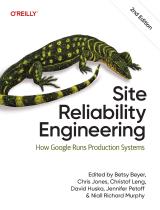
10 years later, the second edition!
It’s interesting what changed, and what stayed the same.
I don’t have enough room to go into the details here - we have an SRECon EMEA ‘26 session for that - but the summary is: we tried to repair what was broken, introduce what was new, and leave behind the now irrelevant.
Fixing #
One of the major criticisms of the first edition had been the relative lack of attention to cultural and organisational issues. This edition has a lot of new material around every aspect of how to be an SRE in any size of organisation, how to hire, how to engage, how to model what you should care about in production, how to defend the value of reliability, and how to understand the cultural context you swim in.
Adding #
Practices have received a substantial tune-up; core practices like SLOs, observability, and incident management have all been updated with what has been learned over the past ten years. Testing, automation, data management, and even that thing that SREs don’t want to admit they do (secretly known as capacity planning) has had a solid amount of work put into the relevant chapters.
Pruning #
The wealth of technical material based around internal Google systems in 1E has been trimmed substantially. Technologies which were exciting and cutting edge in 2016 are now, frankly, commoditised for the most part, and much less intimidating problem spaces generally. Cloud, and first/third-party (OSS or otherwise) services played a huge part in that, a revolution which was really just kicking off when 1E shipped.
Of course, our favourite two vowels (A and I… though I guess you could make a case for E and U…) are not left behind, and we spend a substantial amount of time on some crystal ball gazing in terms of what might happen with AI, but also talking about how Google both leverages AI to achieve SRE tasks, and also how SREs look after AI systems - both topics of vital concern today.
I’m proud of this edition (particularly since I was asked to help out, and didn’t need to be, which I shows a generosity of spirit I appreciate) and we put a lot of thought into what we did and why. It might not be the industry-defining success 1E was, but if it helps people do their jobs better, and understand their worlds just that little bit more, that would be enough success for me.
I (we, really) hope you enjoy it.